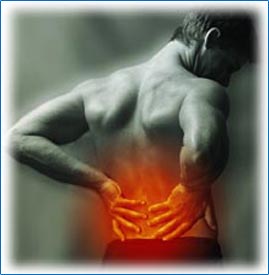
What no one told me when I first started training how often I’d be waking up groaning the morning after a workout. This is especially true for anyone who’s “getting along in years” like I am. I am 42 — not old but certainly not a spring chicken. I train hard and my body reminds me of this after every workout. In a strange, sadistic kind of way I sometimes like it. Within reason, of course. My knee pain I’ve been enduring on and off hasn’t fallen into this category but the other aches and sore spots, in their own kind of way, are not too bad. I’m kind of proud of my pain.

This said, however, pain relief is frequently the order of the day. There are a lot of ways you can tackle pain, internally and externally. Internally would be taking medication like Advil, Tylenol, Motrin, Alleve…that kind of thing. Externally, or topically, would be remedies like Ben-Gay, Tiger Balm, and (my favorite for tendon pain) Penetrex.

Like many other students, I have learned more about sports injuries than I ever wanted to know. I have tendons, muscles, and get injuries I didn’t even know existed. Virtually very week is a new discovery. Patellar, Achilles, and extensor tendons. Injuries like tennis elbow, pulled muscles, shin splints, sprains, fractures, blisters, cuts, abrasions, jumper’s knee, and plantar faciitis. Good times.

Here’s a quick guide of a few preventatives and remedies I’ve found to be helpful over the past 6 months. No, I’m not a doctor, salesperson, or a therapist and I’m not getting any kickback. Of course, your mileage may vary and you should use all these things at your own risk as I don’t offer any guarantees, apologies, or refunds.

Stinger Organic Energy Chews These things are fantastic! Ever try cherry Life Saver gummies? The cherry blossom flavor tastes exactly like ’em. I usually munch a package of these 15 minutes before showtime and it gives me a nice boost. If it’s a particularly intense workout I will often down another package mid-way into the session, along with a LOT of water.
Advil Everyone knows these magic pellets, of course. I have had good luck with it as it’s usually easy on the stomach. I find it does a good job with muscle soreness and also when I feel a headache is coming on. I think it’s more effective than Tylenol, at least for me. By the way, does anyone else think the Advil coating would make a great candy or is it just me?

Tiger Balm This is particularly good for deep muscle aches when I don’t mind stinking like a medicine cabinet. Very effective but smells pretty awful. Has a nice burn but also feels cool as well. A little goes a long way so this tiny jar will last anyone — even a klutz like me who gets hurt a lot — a good amount of time! Has the consistency of ear wax and is a little bit greasy feeling.
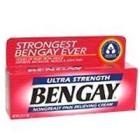
Ben Gay Despite having a name that would make Beavis and Butthead proud this stuff works mighty fine. I have only used the Ultra Strength variety and I learned pretty quickly that you don’t want to slather this stuff on indiscriminately. Fools who try are treated to the kind of sensation not unlike that of a fierce chemical burn. One time I imagined I felt blisters appearing and thought I smelled smoke emanating from my back where I smeared it on too generously. Unwise move. If used more carefully this product does a nice job penetrating in and providing a nice amount of relief to strained muscles. Smells kind of medicine-like but not nearly so much as Tiger Balm. Plus it has a Tic Tac, candy-like scent to it that isn’t altogether unpleasant. My niece gave me a hug once after I’d just put some on and said, “You smell nice!”. Not greasy and doesn’t seem to stain clothing that I’ve noticed.
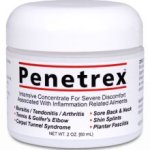
Penetrex As I mentioned above, I am a big fan of this ointment cream. It has a very slight odor, more reminiscent of menthol than anything, goes on non-greasy without any residue. As they say in the product literature, it penetrates the skin to reduce inflammation but it can take multiple applications (sometimes days) to really hit its stride. This latter difference seems to vary from person to person. I felt a difference within hours, especially for tendon strain, my wife has been using it for weeks and still claims that it isn’t effective. The jar is pretty small and you need a fair amount per application. At $20 a jar it can be an expensive remedy if you need to use if often but I think it’s worth it.
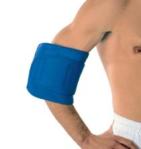
ACE bandage multi-purpose wrap This is a good reusable solution for icing sprains and tendon strains. It consists of an elastic bandage with a pouch inside where you tuck the cold gel pack. Usually lasts about 20 – 30 minutes which is good since I usually only try to keep it on an area (like my knee, for instance) for about 15 minutes. So far I’ve been reusing mine, pretty much daily, for about 3 months and it’s holding up pretty well.

There are certainly many other products on the market that can either prevent or treat injuries; these are just a few I deal with on a routine basis. So as long as I train i think it’s a safe bet that these things will be within arm’s reach.

Aggression Before Technique?

Posted: November 12, 2011 in Attitude, Older, Technique

Out of curiosity I recently ran an informal poll on this blog asking folks what they thought was most important of the four:

  • Speed
  • Technique
  • Power
  • Aggression

I didn’t have a ton of responses so I didn’t have a large sample size but of the people who did respond, the last place answer was power. I don’t know if there’s a universal “right answer” but based on my training I would tend to agree with that. The interesting thing about this answer is that most people who do not train in martial arts would probably rank power as top of the list. I imagine this is because people envision trained fighters ending matches with one well-timed killer blow. WHAM-O! Knockout! In reality, fights are hardly ever that decisive or clean. They are brutal, fast, no-holds-barred affairs with no finesse. If I were to rank the factors in order I would think it might be:

  1. Aggression
  2. Speed
  3. Technique
  4. Power

I recognize that they are all important and one without some of the others is probably a recipe for failure. What’s aggression without power? What’s technique without aggression? They are all intertwined. But there is a critical balance that needs to be achieved to be successful.

Students come to the school all the time who go through the drills with over-the-top power, at least for their current fitness and skill level. They pay attention to the techniques they are taught and try to hit as hard as they can while applying these techniques in drills. Eventually they believe that, as they progress and get better, speed will naturally follow. This was me too.

One of our top senseis tells us all the time that aggression is king. He’ll ask if we’ve ever seen a brawl in high school where a brawny football player faces off with a highly trained Black Belt in the school halls. The Black Belt squares off and starts to get in form as the football player charges in like a rabid rhino and beats the surprised, overwhelmed Black Belt into a pulp. The lesson is that aggression wins out. The tiny dog can savage the slower, bigger dog with the same principle. Overwhelm the attacker.

When I first started, not too long ago, I was having difficulty trying to figure out what I should be emphasizing. I was in the “Power Camp” and thought all my strikes should be knockouts, regardless of speed. This left me exhausted 30 seconds in on a 3-minute drill, wiped out and often with strained muscles. The instructor would be yelling, “Faster! Faster! More aggressive! Like you mean it!” I thought this meant I just needed to condition more and all would be better. This turned out to be only partly true. While in this phase, I was also wondering how speed fit in. Surely if I got my power up with my better conditioning I could just do it faster. But then, what about technique — where did that fit in? Do they all equal each other. Oh, my head.

This notion of power was put to bed quite effectively when we were enlightened with a simple example. If you have your opponent in a clinch and have the opportunity to land a driving knee to their head, leg cocked back and ready to strike, would you be better served to pull your leg back several more inches to deliver a crushing sledgehammer of a blow or launch your flurry of lightning fast attacks at that moment? The answer was the latter. The thinking here is that the split second of additional time necessary to cock the leg back gives the opponent that much more time to recover — and in many fights that can make a big difference. Knee! Knee! Switch step! Knee!

We should attack like a hive of VERY pissed off bees. The opponent should not know where the next hit is coming from this enraged, psychotic dynamo who, only seconds ago, was the victim. No longer the case, the victim is now the attacker, doling out pain in a barrage of quick, painful blows from seemingly every direction as the former attacker either collapses in a bloody and bruised heap on the ground or runs for their life.

Aggression! Roaring, adrenaline-soaked, raging, furious, break-the-chair-over-the-guy’s-head aggression.

This doesn’t mean that technique is out the window. Of course not. Otherwise we’d just show up at the dojo and flail violently at each other like psychotic patients in the mental ward. It also doesn’t mean that power is out the window. With proper form and execution the power will be there. We certainly learned this with 180 kicks when first starting out. Kicking our tombstone pads, our tendency was to power into the kicks — RRRRAAAHHH! Whop! turned into driving a nearly deadened leg around using mostly our core muscles — RRRRRAAAAAAAHHH!  WHAP!!!!!!!! Huge difference. And strangely, a lot less straining to perform.

To some degree or another I struggle every class to find the right balance. I don’t think there’s a universal formula that works for all people or even the same person across all circumstances. I haven’t gotten this all figured out. What I do believe though is that I have to keep these attributes in mind and be aware of how I am applying them.

And in Krav Maga, I’ll try to never forget that to overwhelm any attacker, Aggression is King.

qualities


You’ll notice that this post doesn’t have a survey, just results. That’s because the original survey tool, Polldaddy, now charges for use of its tool. As a result I have moved to Surveymonkey, which you’ll see in use from now on. For older surveys, I have included the results in the original blog post.

Searching for My Grunt

Posted: October 29, 2011 in Class, Technique

No matter how nutty, outgoing, or enthusiastic we are, we all have seem to have a hard time when it comes to coming up with and delivering our kiai — our yell, grunt, or shout we make during a strike (kick, punch, knee, etc.). Hiiiiiiiiiyaahhhhh! You’ve heard that if you’ve watched an old time martial arts movie. That’s a kiai. Here’s a good post on how to kiai, if you need more details. What I am wondering about isn’t so much how to kiai but why so few of us in the beginner classes refuse to do it!

Of course, the simple answer is that it’s….well… embarrassing. Nearly everyone starts out at first making not a sound. Complete and utter silence. In fact, a lot of people just starting out don’t even breathe as they should. Eventually most people in class, myself included, will hiss, that is push air out through a partially open mouth. It’s pretty quiet but appears to get at least part of the job of a kiai done — expelling air out forcefully with the strike as it tightens the stomach muscles to enable you to take a blow to the midsection more safely. It also punctuates the move being performed for added effect.

What it doesn’t do, at least in a real combat situation, is scare the shit out of, startle, or confuse the opponent. Not really necessary in the dojo, most of the time, to be sure but this is the place to find your kiai.

What the hell is THAT noise!?

I think there are a lot of kiais to choose from as long as you follow what appears to be the general rules of avoiding hard consonants and minimizing use of the vocal chords as much as possible. There’s a lot of creativity, it seems, that one can bring to the proceedings if they choose. Hell, make it a weekend project! Try to keep the windows closed and, if you are in an apartment, mind the neighbors. Once coming up with something that feels comfortable the next step is introducing it to the training, especially around the other students that you have been training alongside with for several months and never heard you do more than hiss.

As with everything to do with martial arts — go for it! There’s no holding back, especially with Krav Maga, so why should your kiai be an exception? If you’re going to go all out let everyone hear you mean business is my stance.

Oh, and you should hear mine. I’m not proud.

Swearing in a New Language

Posted: October 22, 2011 in Attitude, Technique

American males, of which I am a card-carrying member, are brought up in a culture where we are given Army men as kids, play cops and robbers with toy guns, play fight with one another, and are pretty obsessed with video games, which are oftentimes rife with death and first person shooter smackdowns. Turning on the TV, going to the movies, or going on the Internet, we are further exposed to loads of violence. Testosterone coursing through  our veins and possessing the ability to recite lines from ‘Pulp Fiction’ from memory, we are lulled into a sense that we truly understand violence and can take care of ourselves in a fight. “How hard is it to throw a punch?” we scoff. “I’ve seen ‘Enter the Dragon’ 14 times and listen to Rap music. I’m a BADASS!”

Every human being is capable of fighting.  But one only has to watch an average school fight or two to see that this is not the case.  Street brawls and schoolyard tussles tend to be brief, violent, but also comically frenetic. Face it, we don’t know how to fight (or fight well) and our punches, learned mostly by watching Clint Eastwood or Jason Statham, well….suck. We can pose and practice in the mirror, strut down dark alleyways like we mean business, but do most of us truly know how to handle ourselves in a throwdown? Probably not.

Many of us turn to martial arts. Broadly, I think it’s fair to categorize them, at least for this blog post, as traditional and reality-based self-defense styles. Styles like Karate, Kenpo, Tae Kwon Do, and Judo are in the former category while styles such as Krav Maga and Haganah fall into the latter category. Both are fine ways to go and neither category is inherently better than the other, let me make that perfectly and abundantly clear. It’s all good. [See “My Style Can Beat Up Your Style!” for more on this subject]. What I have been thinking about a lot lately, though, is how quickly any technique can be made part of one’s natural behavior when one finds themselves in a confrontation.

Let’s take learning a foreign language as an example to illustrate my point. It takes a long time to learn a new language. We fumble around with new words and phrases but ultimately become serviceable if we stick to it long enough and give it a lot of practice. Let’s say we move to France and become fully immersed in the culture — we’re surrounded by people speaking French 24 x 7. We go down to the bowling alley with our French friends and during the last frame drop a bowling ball on our big toe, crushing it to a pulp. In this case, as an American who’s been brought up speaking English, what do we say? “SHIT!!!” not “MERDE!!!!”  English is natural and comes easily to us. Our brain is wired this way because that’s how, from birth, we have learned to communicate verbally with others. In this example at the French bowling alley, this immediate need to express our intense dissatisfaction with our toe being crushed by the ball we don’t even have to think about how to curse. The English version of the expletive comes to mind automatically without a conscious thought.

Same is true of self-defense in the martial arts. In my brief exposure to Uechi-ryu some 20 years ago, and seeing my daughter and her fellow students’ experience in Kenpo class, traditional martial arts take a while to feel natural. For the first several months it feels awkward and unnatural for most and in most styles. I remember feeling this way in particular with the stances in Uechi-ryu. A fine, fine style and I mean no disrespect but I really had a hard time imagining falling naturally into the fighting stance if I entered into a confrontation. It just felt weird to me. Still kind of does. If I were to be attacked within the first several months of training I strongly suspected I’d fall back on my “natural” fighting instincts (i.e., flailing around with wild, ineffective punches) rather than the fighting techniques I had recently been exposed to.

What I like so much about Krav Maga is how natural it feels. I have only been training for 4.5 months, 3 – 4 times a week but — even in that short time — I feel like I would feel completely natural employing these techniques in the real world. They make sense and don’t feel awkward to me.

Again, I am not rating one type of style over another style. That’s not my point. Over time, any style will feel natural to the student and would be extremely effective in any combat situation. What I’m saying is that Krav Maga just seems to make that connection so much quicker. By design, it’s meant to be assimilated easily, rapidly, and takes advantage of your natural reactions. Sure, it takes a lot of work, sweat, and time to be truly great at it but the basics ought to come naturally; a student shouldn’t have to think about falling into particular stances and the order of a particular kata flows.

No sane person wishes a confrontation but if I ever find myself in that unfortunate situation I am positive that I’ll be swearing in French.

This past week was the school’s semi-annual Buddy Week where any student could bring in a friend, roommate, co-worker, spouse, or other unsuspecting family member to Krav Maga class for a couple of free training sessions.

It wasn’t a full bore training week, to be sure. Given the presence of many inexperienced people in our midst (and the fact that the school was supposed to be enticing them, not punishing them) we “shifted down” the intensity somewhat throughout the week and focused again on many rudiments that serve as the foundation to the more advanced teachings.

I saw this week’s influx of people as a very different brand of person than incoming White Belts in a lot of ways. White Belts have made the mental commitment to get into Krav Maga and the ballsy move of stepping into class. This is tough for everyone as everything is new and the unexpected is around every corner. The ‘Buddies’ who came in, on the other hand may have been dared to show up, shamed into coming, or were just ducking in for a class or two to see if this martial art from The Debt, Enough, and Channel 25 News was everything it was cracked up to be. They hadn’t, in nearly every case, made that same gigantic mental leap that a new White Belt makes. It wasn’t necessarily a joke to be in class but in some cases, it wasn’t too far from that. There was a fair amount of laughing, some clowning around, and flat-out talking during our drills’ instructions. None of these were remotely cool and anyone with any common sense should have been able to see that.

This week the instructors were in a bit of an odd situation. They couldn’t start barking at the noobs for a couple of reasons. This would have made the sponsor student who brought them in feel like a tool and it probably would have decreased the likelihood that the Buddy would sign up at the end of the week for a one-month trial — ultimately the real goal of the week when it gets right down to it. This left the instructors a bit more permissive than they ordinarily might have been in these situations.

Wheeeee!

Anyhow, back to the theme. What was the lesson? Well, as I watched the Buddies I could really equate them as People Right Off The Street. Again, as explained above, these weren’t really even White Belts — they were regular people, folks you might encounter in the real world and were the closest approximation to an Average Citizen we would see in school. As such it made it a very interesting exercise to “measure” myself against them. Not in an arrogant kind of “I’m better than you” sort of way but rather in a way that says that this is what I was a little like before thinking about starting up with my training. No, I’m not a superior human compared to the Buddies because of it. I see how these months have shaped me into a more disciplined person though. I don’t whine in class when we do 10 minutes of ab work. I don’t roll my eyes when we don’t get a break. I don’t chatter during class or giggle off to the side with other students. I pay attention, I show respect, and I work my ass off at all times.

I’ve developed a harder, can-do mindset since starting and I’m here to work. Sure I have a very long way to go, a lot of technique to learn, and many bad habits to break. But I can see, as a side-by-side comparison with the Buddies this past week, that I have made tremendous strides in my development and should take a moment to appreciate and reflect on all that this school has brought to my character and physical state since starting this past June.

Posted: October 9, 2011 in Attitude, Class, Lesson of the Week

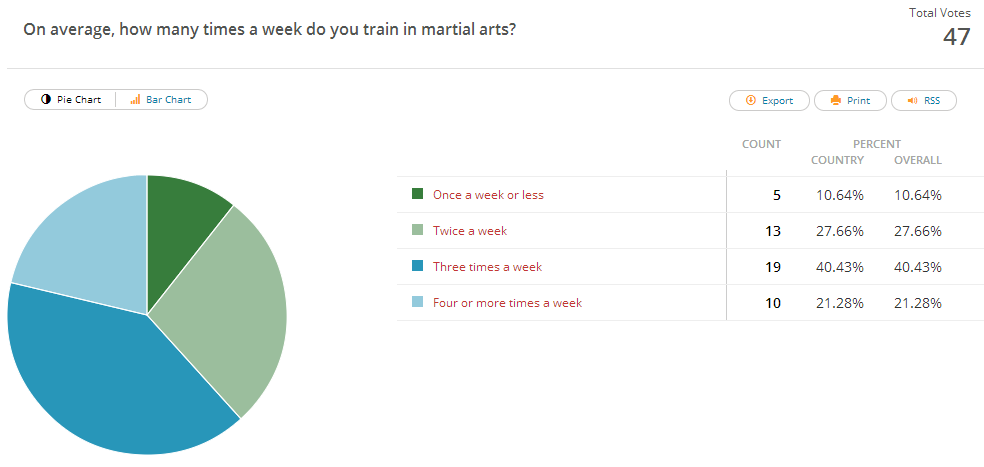
Weekly Poll for September 25, 2011

Posted: October 1, 2011 in Class, Poll

often


You’ll notice that this post doesn’t have a survey, just results. That’s because the original survey tool, Polldaddy, now charges for use of its tool. As a result I have moved to Surveymonkey, which you’ll see in use from now on. For older surveys, I have included the results in the original blog post.

Water, Water, Everywhere

Posted: September 30, 2011 in Exercise, Injury

This post isn’t so much about Krav Maga so much as how I survive classes without turning into a withered raisin. First, let me give you a little back story. Throughout my life I have been plagued with occasional migraines. These are the real deal — sensitivity to light, ripping headache that feels like my head’s going to explode, waves of nausea, dizzyness…. No fun.  Had them since I was a kid and they usually showed themselves after hard physical exertion in the heat. Since I hydrated well prior to working out I had to attribute these to something else. Was it the heat or some kind of migraine triggered by exertion? I tried to solve the mystery but never really came up with a solid reason.

When I started training back in June I continued my water saturation routines, making sure to hydrate obscenely prior, during, and after the class.  I would routinely drink 1.5 liters of water (or more) prior to working out, another .5 liter during the workout, then about 1 – 1.5 liters more afterwards. When I first started I was nervous that every class would end with me staggering out to the car in agony, drenched in sweat, blood gushing from my ears from the migraine pressure, and seeking a cool dark room to wait it out with an ice pack dripping from my forehead.

Nothing of the sort happened.

It dawned on me that perhaps, all these years — all my LIFE — I had been hydrating but just not enough!  Could it have been this simple all along? Was I that much of an idiot? Could I really have been that dense?!

Turns out, yes to all of the above.

I had been hydrating in the past, sure, but just not enough. When I started Krav Maga, I wanted to be sure that the intense workout wouldn’t turn me to dust so I went what I thought was overboard with the water, going way beyond what my body could reasonably want. I mean, really, does anyone need 3 liters of water? I guess now that I’ve had time to really work through this I would have to say that at least I need it.

I take it very seriously now. I never skimp and I never cram.  I always start hydrating a full 2 hours before class.  That way the water has enough time to get into my body. Otherwise I’d get stomach cramps and pee it away before I even started. I had one of those 750 ml Nalgene water bottles that I fill up and carry around with me.  My goal is to drink steadily, but again not too quickly, for those 2 hours and conquer 2 bottles — or even 3, if possible. I know I’m getting close when — pardon my crudeness — I am peeing every 15 – 20 mins. and I’m “running” completely colorless (or lemonade tint) vs. apple juice tint. If I were to work out with apple juice colored pee I can guarantee you I would not be having a great day afterwards. Following the workout I make sure to drink another 750 ml or more and add in juice and/or recovery drinks if I feel like it. I also try to drink as much as I can during the workout, though we don’t usually have too many opportunities.

Your mileage may vary, of course. I am heavyset and sweat easily so I can certainly see how my fluid intake needs are more severe than, say, a runway super-model. Physiologically I think my body is just more water needy than others. I also should drink more during the day anyhow — impending workout or not. You might need far less than me or not have to have a hydration ritual along the lines of what I described. If so, great, but I personally would still suggest that you think about keeping hydration on your mind and make an effort to up your intake if possible. Even if you aren’t feeling any ill effects your body could probably benefit nonetheless, whether you’re going to be working out or not.

Another action-packed week in class.  This was the first week where I ventured into a morning class — mostly due to a schedule conflict that prevented me from attended that night.  Why does this matter?  Well, unlike the evening classes I am accustomed to, the morning classes have students from White Belt up to and including Black Belts.  Quite an interesting mix.  I partnered with a Red/Black Belt fortunately and during our session together (largely consisting of punching drills with Muay Thai pads) I learned some great tips and was able to watch a far more experienced student from up close without feeling like I was staring.

One thing I learned in that class is that there’s always room for improvement.  Sure, that sounds trite but it really is true.  We lower belt students can sometimes put the more advanced students on a pedestal but training with them reminds you that they’re students just like us.  Sure, they are far more experienced and have a lot more skills under their belts (so to speak) but they can struggle just as much as anyone.  As I was off for a quick water break off the the side I’d see a Black Belt off to my right gasping and gulping water just like me.  As I dropped my arms to the side quickly to shake off a cramp, so too did my partner on occasion when it came to her turn.

It was somewhat surprising to me that many of the talks we get in our evening classes about the basics (i.e., moving the hips into a punch, staying aware of our footwork, breathing, etc.) are repeated to even the more advanced students.  It never hurts to drill these lessons mercilessly into people’s heads so they are second-nature and triggered by reflexes and habit more than thinking.

On another front, this was my first week of sparring as well.  It was enlightening for me in many ways.  Instead of our practicing into the mirror or facing off with a partner and pads I was actually squaring off with another student practicing various moves.  No, it wasn’t full-contact, animal sparring (in fact, I don’t have my gear in yet) but it was different enough to appreciate the difference.

One last lesson I picked up, also in the sparring, was the notion of elbows flaring out.  Sensei pointed out that many of us are likely familiar with the classic “boxing stance” with the elbows in tight and the gloves coming up to protect the face.  He demonstrated the difference in Muay Thai — elbows out and a larger gap between gloves.  The gap is there to invite the opponent to strike between them, making for easier deflection, and the elbows are flared because — unlike boxing — we have to keep in mind knees and kicks.  Elbows being flared are far better positioned to deal with these incoming blows.

Coming up on our next stripe test next week, which should be exciting. I am also now able to have access to Jui Jitsu and a brand-new, dedicated Muay Thai  class.  Like a kid in a candy store, me.  If I only had more time…

How to Ruin Someone’s Training Session

Posted: September 3, 2011 in Class, Older

We are told in class often that proper pad holding prevents injury, creates a more realistic target for your partner, and desensitizes the pad holder to blows. I am not going to lecture on proper pad holding. Firstly, I am still quite new to Krav Maga and have no illusions that I am the voice of authority on anything (probably won’t be for another few years). Second, there are other resources you can refer to that have “been there, done that”.

Having been on the receiving end of some poor pad holding I have come close to hyperextending my arm, and more recently, been the victim of The Cheater. We’ve all worked opposite The Cheater. This is someone who tries to cut corners because he feels that what the drill involves isn’t important to everyone’s (or at least his) goals.

OOOF!

In this particular instance we were performing a drill where a pad holder would hold a tombstone and their partner would get them in a clinch and drive them to the other side of the dojo with knees. The pad holder was instructed to resist as much as possible. If they were able to keep their partner from driving them backward — or better yet, could drive the attacker backwards! — they were encouraged to do so. In this case, my partner gave me a wink and said he’d move backwards easily. Too baffled to respond to this idiocy I lined up for the drill and we began. Sure enough, I was practically chasing my pad holding partner across the dojo as he scurried backwards with virtually no resistance.

I was not pleased. I called out repeatedly (but not loudly enough to get the guy in trouble) for more resistance but to no avail. I didn’t show any outward sign of frustration, though in retrospect maybe I should have. As minor as this incident sounds it really had an effect on me and I left class that night feeling cheated. There were a few other shortcuts my partner pulled out during class that I don’t really need to get into but in total I felt like it was almost a wasted training session. I vowed that I would not let that happen again and would also be more diligent about how I held pads and performed in general for my training partner.

We could, by all accounts, end this blog post right now but I have one other related anecdote I want to put out there and it relates to this same drill described above. We had a visiting instructor at our school one day. Big guy. No, HUGE guy. Muscle-bound, hulking frame — you get the idea. Very nice fella, as it turns out, but I wouldn’t want to get on this guy’s bad side. As we were being instructed on the drill I decided as the pad holder that I was going to do my best to not budge. I am a pretty big guy myself — 6′ 4″ and….well, I’m big. As the drill started I dug in. My partner clinched me and began driving the knees. Nothing. I didn’t move an inch. In fact, I began driving him back forcefully as the rest of the class marched their way to the other side of the dojo. Our visiting instructor saw this and came over, saying to my partner, “Alright. Take this guy over here. I got this guy”, jabbing a finger at me.

Oh crap.

As I was clinched harder than I knew was possible I was driven to the other side of the dojo by massive sledgehammer blows that had me practically seeing stars. The visiting instructor’s giant forearm was wedged viciously under my jaw and I was alternately slammed by the knees and rammed backwards with his iron arm in my throat. It was epic and I actually did better than I originally feared.

<gag><wheeze>

Interestingly, it turns out the guy I was partnered with was holding back, off to the side, quietly simmering since he got called aside. He was probably feeling frustrated and humiliated for getting put on the bench and I could tell in his face that he was determined to do better. As I partnered up with him again he was like a demon possessed and gave a performance that almost rivaled the visiting instructor’s, driving me back — again — with powerful, driving knees and a mad look of determination on his face. Yeah, I was having quite the night.

There are a bunch of lessons I think can be taken from this anecdote and I’ll leave it to you to draw your own conclusions. I myself was made aware of how a senior practitioner can belittle someone without even meaning to. I hope to avoid that in the future as I climb the ranks. I also found out that, if I can withstand that punishment from the massively powerful visiting instructor, I can probably handle anyone’s knees in the class as well. Finally, I saw how determination can make all the difference. Comparing my partner’s performance from the first attempt to the second was night and day. When he got his second chance he let go of all inhibitions and gave it his all. I’m here to tell you that it was like a completely different person and I was very impressed by the difference. I always want to train like he did that second go-around and so should you.

Belts as Goals

Posted: August 16, 2011 in Attitude, Belt Test, Belts, Older

At our recent belt ceremony we heard more about what belts mean at our school. The topic of belts is a very touchy one for some and a very engrossing one for others, oftentimes depending on where a person is on the ‘belt continuum’.  Observation has led me to believe that more advanced students claim to think less about belts than newer students. Anyhow, what made this talk interesting was that it gave us another way to think of the belt. Many of us who train in martial arts see the belt as a reward and there’s no doubt that it is indeed that.  But it is actually something more.

The reason that our school grants so many belts when compared to many other Krav Maga schools is that belts are seen as goals.  Our school Master told us that when he first obtained his Black Belt he asked, “What next?”. He had been conditioned over the years to never be satisfied that “that was it”.  He has been training in martial arts since the age of 11 and this is one of the most important lessons he has gained from it: to set goals and always look for the next step — how to improve and get to the next level of greatness.  It’s his and the school’s philosophy that belts provide those incremental steps to get to your ultimate end goal, the Black Belt and beyond.

One analogy he gave us is the old adage of:

“What’s the best way to eat an elephant? One bite at a time”.

This is, in his opinion, the way to achieve the long-term goal of Black Belt. And what better way to do it in martial arts than defining belts that are not strung out by many months. One could argue that belts separated by a longer time interval serve the same purpose, I suppose. What is truly the difference between a belt being granted every 3 months vs. every 12 months, right? I think, as a matter of personal preference, that the difference is there and appreciate the smaller increments.  Again, to paraphrase, the school Master said if he were to set out to lose 20 pounds in 2 months he wouldn’t make that his only goal. It’s too big and tough to measure progress against and could be frustrating and overwhelming. Instead he would first figure that he’d need to lose 10 pounds a month, which means 2.5 pounds a week.  This is how the Black Belt journey is subdivided.  Assuming the average student requires 4 to 6.5 years of training to achieve that level of mastery and proficiency, the journey is divided by rough intervals by belts (and some of the belts further divided by stripes).

In the end, the belt to us now looks a little different. Yes, it’s a measure of our experience and time spent training.  But now, thanks to that talk, we can now recognize it for something even greater — a tangible goal that we can aspire to attain through hard work and dedication every day we spend in class.

Let’s Talk Equipment

Posted: August 8, 2011 in Equipment, Older

This post is all about the stuff that will keep your injuries to a minimum.  I’ve seen and talked with people who show up to class without owning/wearing some key equipment and see their reactions when they are injured in class.  Baffled, moaning in pain, and — at that moment — utterly convinced that they need to make an investment in some more gear.

I am pretty sure there would be a fair amount of debate over what gear is essential vs. optional so I’m not going to go there.  This post is about what I use and some of my rationale as to why it matters to me.

The Cup
If you are a female reading this post you can safely proceed to the next item in the list (unless you have a male partner in training who hasn’t yet “seen the light” on this piece of equipment — believe me they will once they get clocked in the nuts once).

Oooooooofff!

This, to me, is the most critical of all protective equipment for guys.  I was stupid enough to show up to my first several classes without owning or wearing one, ignorantly believing that it was something you needed to invest in only when you started sparring.  Dumb. Fortunately for me, I never got beaned in that area so I was one of the lucky ones.  I did, however, become aware of this mistake when an instructor told us about the importance of one in class.  I found the time to order one online the moment I got home.  The HELL was I thinking?

Anyhow, as I found out, there are many brands to choose from but startlingly they haven’t changed shape since I wore one as a kid playing football.  Same awkward pyramid shape which gives you the least amount of room where you need it most.  Leave it at that, ladies. I went ahead and ordered the most highly-rated one anyhow (the Shock Doctor Men’s Ultra Supporter with Ultra Carbon Flex Cup) and wore it to my next few classes.  It didn’t take long to realize that this wasn’t going to be the most comfortable form of protection I was going to own.  I immediately went searching and eventually found a standout cup that had rethought the whole notion of a cup, the Nutty Buddy.

My Nutty Buddy made a huge, huge difference and I’d highly recommend it to anyone looking for a cup.  Super comfortable and its design allows for you to slip in or remove the cup while you’re wearing the jock strap, making the drive to and from class even more comfortable. You should know that the customer service was non-existent and the order status on the site was completely broken but I got mine in a week in perfect condition and have been liking it a lot since.

Note: you don’t have to buy the compression shorts from Nutty Buddy.  There is nothing unique about theirs and I think you can find cheaper ones elsewhere that are actually machine washable.  Champion is a good brand to seek out for these.

By the way, you can check out my other blog post, Never Without a Cup, for more details and thoughts on cups.

Ankle Supporter Wraps
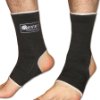
I was finding that my ankles were turning during sharp turns and could use some more support during some of our bouncing around.  I got my hands on some Muay Thai ankle support wraps (more like heavy elastic socks with the heels cut out really) and have felt a lot more confident in class as a result.  I have big ankles and calves and these tend to really hug me tight but so far my feet haven’t turned purple and the benefit outweighs the slight discomfort so I’m sticking with them.

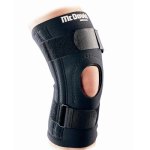
421R Brace

Knee Brace
Clearly not needed for most people but I have had a history of knee problems starting about 20 some-odd years ago when I dislocated my right knee and subsequently tore my MCL.  I was having a heck of a time with knee pain after class and a trip to my doctor (and an X-Ray later) I found out I have arthritis in the knee.  Anyhow, a good OTC patella knee brace from McDavid (the 421R, Protection Level II for me) really did the trick.  Yes, I can still tweak my knee but this little neoprene wrap does wonders to supply a little stability and keep me aware that danger lurks beneath if I’m not very careful.

MMA gloves

Gloves
This is somewhat of a “luxury item” and some folks in class wouldn’t bother with them as it detracts from the tough image they are trying so hard to cultivate in class.  Nevertheless, I found that during partner routines when bag holding was needed, these gloves have saved unnecessary injuries to the ol’ hands and made it easier to keep control when I am disgustingly sweaty, which for me is pretty much all the friggin’ time.

81tOatFIYqL._SL1500_

Venum Gloves

There are loads of MMA gloves to choose from.  Ultimately you want a pair that fits right for you and everyone’s unique. How do you strike on your hands? Where is the greatest area of impact. Do you like a lot of padding? How hard/soft do you prefer your padding? Do you like open or closed palms? Do you like short of long sleeves on your fingers? These are just some of the things to consider when fitting a pair. I like Venums and Ring to Cage myself.

Spray Bottle
A spray bottle?  Yeah, just a regular old spray bottle filled with water and maybe an ice cube or two if you’re into that.  Works wonders during those super-quick hydration breaks in class.  Just close your eyes and spray your overheated noggin liberally.  You’d be surprised what a refreshing break this can make.  And, hey, in the Summer the dojo can be insanely hot and humid; I need all the help I can get!

Good Gym Bag
I think it’s essential to have a really good gym bag with loads of compartments.  This keeps all your stuff in an easy-to-find location and allows you to get to it quickly.  You should find one with pockets for your keys, wallet, gloves, water bottle…. that kind of thing.  Also, if you can find one with ventilated compartments for wet towels and shirts — even better.  I see so many people show up without gym bags, juggling their stuff as they come and go to class.  Just seems like a real unnecessary hassle to me when a decent gym bag is between $50 and $100.

IMPORTANT: Err on the side of getting a bag too large rather than too small.  You’ll be hauling a lot of equipment to and from class like boxing gloves, chest protectors, shoes, towels, etc. You want to make sure you don’t need to cram things into the bag because you went too small.

Sandals
I have heard stories from friends and parents of students of ringworm.  Gross.  Despite the name this is actually a super nasty fungus called Dermatophytosis that you can pick up, often in the feet, from a sweaty gym surface — like a mat or shower floor.  It’s pretty easily cured but a really uncomfortable condition to have. Even the cleanest of dojos/gyms can have this danger so I protect myself as much as I can by wearing sandals in the common areas.  I have to take them off, of course, when I enter the training area but when I show up and am walking around prior to and after class I always slip on sandals to keep as safe and protected as I can.

I handle mine carefully when I remove them since it’s safer to assume that there are germs on the sandals.  I wipe them down occasionally with Lysol wipes or spray them with Lysol spray.

Mop-Up Towels
If you are serious about training you will sweat — and sweat a LOT.  I find it’s helpful to have a towel or two handy for a couple of reasons.  One, to clear the sweat from my eyes (stings like a bastard) and two, to mop up the mat where I have been creating a pond of sweat.  Not only courteous but also safe (see Sandals above). To perhaps state the obvious here, these are two completely separate towels!

Hand Sanitizer
One thing you can be sure of in Krav Maga and that is that you will be handling other people’s sweaty bodies during the course of any class.  Whether it’s a clinch, a throw, or choke maneuver, you will be getting their sweat and germs all over you, particularly your hands.  Once class is over you most likely put your shoes back on then head back to your car.  Germs find their way onto your keys, steering wheel, and everything else.  Not to sound like I have OCD or anything but this is how germs spread.  Better safe than sorry (and decrease the gross factor), you can zap these germs with some hand sanitizer, Wet Ones, or even a trip to the rest room for a quick wash before leaving the dojo for the night. I actually think dojos should have those dispensers hanging on the walls but hey, maybe that’s just me…

That’s about it.  I am not a fan of over-equipping myself but I’ve learned that this stuff makes all the difference between a painful workout and a comfortable and SAFE workout. My advice is: don’t skimp on this stuff.  Overall, this is an inexpensive sport as far as equipment goes and you might as well make the investments to keep safe.  I am not yet into sparring though when I am you can bet I’ll be buying a good quality mouth guard.  For now I am on the fence about that as it really isn’t warranted quite yet.

Last note: keep this stuff CLEAN.  Don’t cheat and wear equipment for weeks if it should be washed (i.e., jock straps, braces, wraps, etc.).  You won’t be doing anyone any favors if you are wearing these Petri dishes to class and getting germs all over you and the dojo (again, see the note about ringworm in Sandals).